
Why the Years You Think You Wasted Still Weigh on You
Certain years still feel wasted long after they’ve passed — this looks at why, and at what a teaching on restoration says was actually happening during them.
- Why “wasted time” gets measured on the wrong ledger
- Where the line about the locust actually comes from
- A short practice for re-reading what those years built
If certain years still feel wasted — the ones spent on people who didn’t stay, work that led nowhere, a search no one around you understood — the weight isn’t proof you made a mistake. It’s proof you never settled for less than what you were actually looking for. Yogananda’s teaching draws a hard line between time that vanishes and effort that gets stored. What felt like drifting was, in his account, preparation: a nervous system slowly getting ready to hold something it wasn’t ready for yet. That doesn’t erase the grief of those years. It changes what they were doing while they passed.
The advice you’ve probably heard is some version of “the past is behind you, stop dwelling on it.” There’s truth in that — replaying old decisions on a loop doesn’t move anyone forward. But it treats the years themselves as neutral, a closed account with nothing left inside. Yogananda’s teaching does something stranger. It doesn’t ask you to let the years go. It asks you to notice what they were quietly building the whole time you assumed nothing was happening.
Why Does the Weight of Wasted Years Never Fully Lift?
Most people carry at least one stretch of years they’d rather not account for. A relationship that consumed a decade and left nothing. A career detour with no clean line on a resume. A spiritual search that looked, from the outside, like wandering. The grief attached to those years is specific — it isn’t sadness about one event, it’s a running tally of time that seemingly produced nothing to show.
The tradition Yogananda taught reframes what “produced nothing” even means. In his account, effort doesn’t evaporate just because the result wasn’t visible on the surface. It settles into readiness — the capacity to actually hold a deeper current once it arrives. A person who searched for years without an answer isn’t behind a person who found one quickly. They’re carrying something the second person hasn’t had to build yet.
This is why the weight doesn’t lift on its own, no matter how many times someone tells you to move on. You’re grieving those years by the wrong ledger. The visible ledger says: nothing to show. The other ledger — the one this teaching describes — was recording the whole time.

The Locust Was Never the End of the Story
The line that opens this piece comes from the Book of Joel, a short prophetic text describing a locust plague that had stripped a region bare — fields, vines, everything a community depended on gone in a season. What follows the destruction in that text is a promise: the years the insects consumed would be given back, not as a metaphor, but as an actual reversal.
Yogananda folded that promise into a very different vocabulary — one about duration, effort, and what he called the spiral of time rather than a straight line running away from you. Read next to each other, the two ideas rhyme: loss that looks total and permanent, followed by a mechanism that returns exactly what seemed gone. He wasn’t using the verse as decoration. He was pointing at the same structure with a different toolkit.
Who Was the Teacher Behind This Teaching?
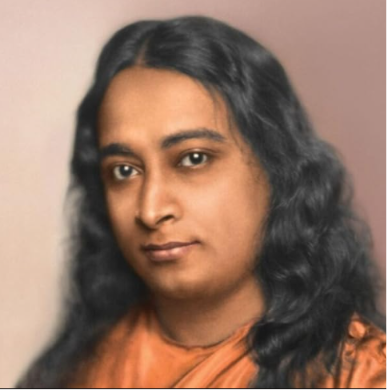
Paramahansa Yogananda (1893–1952) was the monk who brought Kriya Yoga from India to a Western audience, most widely through his book Autobiography of a Yogi and the organization he founded, Self-Realization Fellowship. The framework of years, duration, and stored effort discussed here comes from his broader body of commentary on the Kriya lineage passed down from his teacher’s teacher, Lahiri Mahasaya. For more on his life and the organization he built, the Wikipedia entry on Yogananda and the Self-Realization Fellowship’s official site are both good starting points.
The Gita passage this teaching rests on describes the same restoration in a single line, and the narrated version below walks through where the “million years” figure comes from and how Yogananda claimed it collapses.
A Practice for Turning Stored Years Into Fuel
This isn’t Kriya itself — that technique is transmitted directly, by a teacher, to a prepared student, and nothing written here substitutes for that. But the reframing underneath it is something you can sit with on your own, in about five minutes.
Pick one stretch of years you’ve filed under “wasted.” Sit with it, and ask one question: what capacity does this period leave me with that I would not have without it? Not what it should have produced. What it actually built — patience with uncertainty, a tolerance for being misunderstood, a habit of continuing without proof it will work.
Write down whatever answer surfaces, even if it feels small or unconvincing at first. Don’t edit it into something more impressive. The point isn’t to find a silver lining. It’s to notice that the ledger you’ve been using — visible result, or nothing — was never the only one being kept.

What Changes When You Stop Calling It Wasted?
Nothing about the years themselves changes. What changes is which ledger you’re reading them from.
| What the mind does | What the teaching proposes |
|---|---|
| Measures the years by what they produced on the surface | Measures them by what they prepared underneath the surface |
| Treats unfinished searching as failure | Treats unfinished searching as stored effort, carried forward |
| Grieves the time as gone for nothing | Reads the time as the reason you’re ready for what’s next |
| Wants proof before it will stop grieving | Offers no proof — only a different account of what happened |
Frequently Asked Questions
Why do some years feel wasted even when nothing went wrong?
Because the mind measures those years by visible output — a result, a milestone, something to point to. Yogananda’s framework measures them by what they built beneath the surface, which doesn’t show up on that ledger at all.
Does Kriya Yoga teach that no time is ever truly lost?
Yes, in the sense that effort is treated as stored rather than spent. Yogananda described even unfinished spiritual effort as carried forward, never discarded, whether within one life or across several.
What did Yogananda mean by “accumulated fuel”?
He meant that searching without a visible result still does something physical: it prepares the nervous system to hold a deeper current later. The years of searching are the fuel the eventual practice runs on.
How is this different from just accepting the past?
Acceptance treats the past as closed. This teaching treats it as active — the years didn’t just happen to you, they were doing something, and that something is still available to draw on.
Why your mind keeps rehearsing conversations and futures that never actually happen

You don’t have to reclaim those years by proving they mattered. You can let them have mattered already, and keep moving.