
Why Chasing Peace Pushes It Further Away
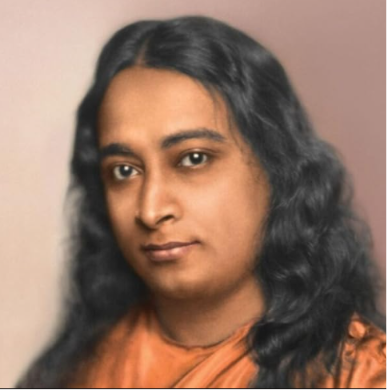
Paramahansa Yogananda
The distance is not the problem. The reaching is. Every time you search harder for peace, calm, or a settled kind of happiness, you push your own attention further out in front of it, and the gap you feel is that attention landing somewhere the thing itself never was. Stop reaching for one breath and nothing collapses — nothing is lost — because what you were chasing was never actually far away. It was underneath the chase the whole time.
Seeking peace as a future destination is what makes it feel absent right now. The relief you are after was never at the far end of the effort — it was available before the effort started.
- The ache of “not there yet” is often attention pointed at a future arrival, not evidence something is missing
- Stopping the reach for even a moment does not cost you anything you actually had
- A 2,000-year-old teaching story and a modern spiritual teacher describe the identical mechanism
You already asked this question in a different form, probably without meaning to. It showed up as “why does relaxing feel harder than working,” or “why do I feel further from calm the more I try to get calm,” or the quieter version that never gets said out loud: what is actually wrong with me that this keeps not working. None of those are separate questions. They are one question wearing different clothes, and the honest answer starts by refusing the premise underneath all three — that something has to be fixed, found, or finally reached before the relief is allowed to arrive.
Seeing The Pattern Doesn’t Fix It — It Just Stops You From Hiding From It
Before anything changes, notice the shape this takes in an ordinary week. A brass cup sits full on the low wooden table because the tea went cold while you were somewhere else in your head. A newspaper rides folded and unread on the passenger seat for three days straight. A meditation cushion by the window holds the exact dent it made this morning and hasn’t been touched since. None of these things are broken. They are just proof that your attention keeps leaving the room it is actually in.
That is the pattern, and naming it does not resolve it — it only removes the option of pretending you hadn’t noticed.
| Before you see the pattern | After you see the pattern |
|---|---|
| Distance from peace feels like a fact about your life | Distance from peace reads as attention aimed at tomorrow instead of now |
| Every ache means you haven’t arrived yet | The ache is the sensation of reaching, not a verdict on your progress |
| Stillness feels like giving up on getting somewhere | Stillness feels like finally checking what was under your own floor |
| The next milestone is where the relief lives | The relief was available before any milestone was set |

The search and the stillness were never in two different places.
Everything You Tried Made The Distance Feel Wider, Not Shorter
Here is the part that runs against everything you were taught about getting better at things: effort was supposed to close the gap. Try harder, get closer. But peace does not behave like a skill you sharpen through repetition, and treating it like one is exactly what keeps it out of reach. The gravel path across a quiet courtyard does not get you home faster because you walk it with more urgency — it just makes the walk louder. Every extra push toward calm adds one more layer of “not yet” between you and the calm you already have some access to right now.
This is the inversion worth sitting with: the strategies that felt like progress — reading one more book on the subject, trying one more method, promising yourself relief after the next milestone — were not moving you closer. They were the noise convincing you there was still a road left to walk. There is a reason this echoes something people have circled for a long time, including the writer who put it more bluntly than most.
“Don’t seek happiness. If you seek it, you won’t find it, because seeking is the antithesis of happiness.”
Eckhart Tolle, A New EarthThat line is not a riddle. It is a mechanical description. The seeking itself occupies the exact space where the thing sought would otherwise be noticed — which is also why rehearsing futures that never arrive produces the same tired, unfinished feeling as chasing peace does. Both are the mind standing in front of the present moment, facing the wrong way.
The Guru’s Answer Wasn’t About Finding God At All
A young man spent weeks in real discipline — long hours folded in stillness, back straight, breath slow — trying to reach something he called God. This was Paramahansa Yogananda, later known worldwide for his account of training under his teacher Sri Yukteswar. Worn from the effort, he finally asked his guru the question every serious seeker eventually asks without realizing it is the wrong question: when will I find Him.
Sri Yukteswar didn’t hand him a new technique. He told him, simply, that he already had. Not that the discipline was about to pay off. Not that he was close. That the finding had already happened, underneath the searching, the entire time the searching was going on. The outward longing itself — the very motion of reaching for something else — was what had kept him from noticing a joy that was never displaced.
The video below carries the one thing text can’t reproduce here: the exact cadence of that guru’s answer, read the way it was meant to land.
You Don’t Need A New Technique — You Need One Honest Question
Nothing here asks you to add a routine. It asks you to interrupt one, briefly, the next time you catch yourself reaching.
The moment you notice the pull — checking a phone that hasn’t buzzed, standing at an open fridge with no memory of what you needed, rushing toward a door that never seems to get closer — pause and ask one plain question: what exactly do I think is missing right now? Not to answer it cleverly. Just to hear how it sounds out loud. Most of the time the honest answer is nothing you can name, only a habit of reaching that started long before today and never checked whether the thing it was reaching for had already arrived.
Ask it again tomorrow, in a different moment. That repetition, not a new method, is what slowly loosens the grip.

One honest question does more than a hundred new habits.
The Reaching Was Never The Road — It Was The Wall
There’s an old teaching tale about a man who, as a boy, dug a shallow well under the floorboards of his family’s house — and somehow lost all memory of doing it. For decades afterward he trekked to the village well at dawn, hauled two heavy pails back over the same tired stretch of road, and wore the walk like a badge of devotion. Checking beneath his own home never once crossed his mind.
Laugh at him if you want. Just notice, a beat later, how closely his pails resemble your own reaching. Nothing about that well was concealed. It sat exactly where he refused to look, because looking would have meant stopping — and stopping, to him, felt indistinguishable from surrender.
What you are chasing already found you first.
Soul RoarThat is the whole inversion in one image. The road was never leading anywhere. It was the distraction from the one place worth stopping.
Questions People Ask About Chasing Peace (And Why It Backfires)
Why does the harder I try to find peace, the more it seems to disappear?
Because searching keeps your attention pointed at a future arrival instead of the present moment, and that forward-pointed attention is what creates the feeling of distance in the first place. The seeking is not the road toward peace — it is standing in front of it.
Does this mean wanting things is the problem?
No. Wanting stays exactly as loud as it is. What changes is where you assume the relief is located — not at the end of the wanting, but underneath it, available the entire time.
How do I stop chasing without giving up on what I actually want?
Start by noticing the reach itself in your body the next time it shows up, without trying to fix or finish it. That single act of noticing, repeated, does more than any new technique.
What did Yogananda’s guru mean when he said he had already found God?
Sri Yukteswar was pointing out that the joy Yogananda kept meditating toward was already present beneath the search itself, and that his outward longing was what kept him from noticing it.

The well was never hidden. It was just beneath the one place he never thought to look.
You stop searching. You start seeing. And the well that was always under your own floor stops being a story about someone else.