
Why Your Mind Rehearses Futures You Never Live
Your mind builds tomorrow to escape today. Here is why the rehearsal feels real, and how an ancient yogic teaching points back to the present.
- The hidden mechanism that turns imagination into avoidance
- Why productivity can be a disguise for waiting
- A simple practice of returning to what is actually here
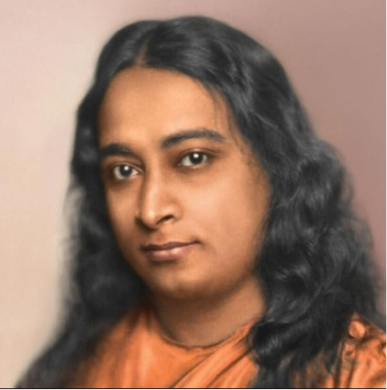 Paramahansa Yogananda — disciple of Sri Yukteswar, who carried this teaching from the Bhagavad Gita to the West
Your mind does not wander because it is broken. It wanders because it has mistaken rehearsal for living. Every scenario you build — the conversation, the victory, the disaster that never comes — delivers the sense of having accomplished something, without the exposure that real action demands. The architect drafts forever because drafting is safe and building is not. That is the whole mechanism. What it produces is not failure. It is a quiet, exhausting success at staying exactly where you are, while the years pass in the editing room of your own thoughts.
To see the pattern clearly, though, two things that look identical have to be pulled apart.
The Rehearsal Is the Reward
There is a difference between planning a life and rehearsing one. Planning picks a direction, gathers what it needs, and then lets the outcome go. Rehearsing builds the same room a thousand times and never steps inside. The mind that plans uses imagination as a tool. The mind that rehearses uses it as a hiding place.
One question separates them: does the thought end in a decision, or does it end in another thought? If the map keeps getting redrawn, nobody is travelling. The calendar fills, the inbox empties, and the life that was supposed to happen in the gaps keeps being moved to a week that never comes.

Once you can see the costume, the thing wearing it becomes obvious.
Your Calendar Is a Costume for Waiting
The pattern does not announce itself as anxiety. It arrives dressed as responsibility. The phone comes out at a red light — nothing is waiting there, but the silence feels like something you forgot to fill. Emails get drafted near midnight for conversations that may never take place. Furniture gets arranged in rooms nobody has rented, arguments get won against people who never showed up. The cup on the desk goes cold somewhere in the middle of all that.
Here is the diagnosis. The mind is not defective; it is loyal to a lie — that the next moment matters more than this one, that the imagined outcome is more real than the hand in front of your face. At some point you began stockpiling contingencies the way other people stockpile insurance, and for the same reason: not because the fire is expected, but because holding the policy feels like safety. Deciding in advance starts to feel like living in advance. It isn't.
The lie is old and it wears a respectable face — foresight, prudence, being someone who thinks ahead. But foresight that never lands becomes hindsight about something that never happened. That is not preparing for life. That is preparing to prepare.
And the symptom is only half of it. The other half is the one doing the drafting.
The Architect Never Moves Into the House
Look at what accumulates over the years. Not experiences — versions. Each one refined, none inhabited. The mental library fills with blueprints for houses nobody moved into, scores nobody performed, routes nobody walked. The strange part is how satisfying it feels to add another one. Completion arrives at the drafting stage, which quietly makes the building stage optional.
Preparation has a ceiling, and most people never find it. Past a certain point, more thinking stops producing readiness and starts producing weight. The extra scenario does not sharpen the decision; it divides the attention that would have carried it out. Spread thin enough, intention loses the power to move anything at all — and the paralysis looks so much like diligence that nobody, least of all you, calls it what it is.
None of this is a discipline problem, which is exactly why discipline never fixes it. It is a category error about what the instrument is for. Something built to model problems ends up being used as an address. The rent gets paid daily, in attention, while everything outside waits like a friend whose invitations keep getting moved.
Sri Yukteswar Giri (1855–1936) was a Bengali monk and astronomer who taught in Serampore, near Calcutta, and became the guru of Paramahansa Yogananda — the student who would later carry these teachings to the United States. He spent decades watching people sit in silence while their minds ran marathons, and gave that noise a name: the natural tumult. His reading of the Bhagavad Gita, the dialogue between Krishna and the warrior Arjuna, treats chapter six not as an order to suppress thinking but as a description of a return — attention brought back, one instant at a time, to what is already here. He called what waits underneath the Infinite, or One Light: not a destination anyone climbs toward, but something that becomes visible once the dust of mental activity settles.

The teaching does not ask for a new mind. It asks you to stop building long enough to notice the one already here.
Stillness Is Not the Absence of Thought
There is nothing to fix. There is only something to notice. The next time the mind starts its familiar migration — toward the meeting, the conversation, the version of you that lives only in imagination — do not push it back. Do not argue with it. Just notice the texture of the thought. Is it warm with possibility, or cold with dread? Does it arrive with a deadline, or with a whisper saying not yet, one more draft?
Then, without forcing anything, let the attention drop into the body. The weight of your feet against the floor. The temperature of the air on your face. The chest rising and falling. Nothing here is trying to stop the mind. This is only choosing to occupy the body the mind left behind. Do it once. Then do it again whenever you remember. It is not a technique. It is a kind of remembering.
Restlessness is not evidence of too many options. It is evidence that the one position requiring no options has been forgotten — the position that exists before the choice, before the plan, underneath the whole apparatus. Nothing has to be believed here. It only has to be checked, once, by feeling your own weight in the chair.
The world, meanwhile, will offer faster remedies. It is worth seeing why they fail before trying them.
Hard Work Is Not the Same As Presence
Stay busy. Plan ahead. Think positive. Meditate harder. Wait until you feel ready. Each of these sounds like action, and each is the same rehearsal wearing different clothes. The advice is not wrong — it is incomplete. It treats restlessness while feeding the belief underneath it: that doing more will eventually turn into being more.
| What the world tells you | Why it feeds the loop |
|---|---|
| Keep busy to quiet the mind | Busyness is rehearsal with a paycheck; the same avoidance hides behind a full calendar |
| Make a five-year plan | The plan becomes the product, and living gets deferred to a slide that keeps getting revised |
| Think positive thoughts | Forced optimism is still rehearsal; it edits the script instead of ending the show |
| Meditate to clear your head | Once stillness becomes an achievement, the mind rehearses it rather than inhabiting it |
| Wait until you feel ready | Readiness is a moving target set by the same architect who never builds |
The thread running through all five is subtle. Every one of them asks the mind to do more, manage more, decide more. Not one asks it to stop performing.

The same questions tend to come back. Here they are, answered directly.
What Comes After the Rehearsal
Why does my mind create negative scenarios?
For the same reason it creates hopeful ones: rehearsal feels like preparation, and preparation feels like control. The dark version is not a warning. It is a draft the mind keeps editing in the hope of steering something that has not happened. The cost is that the fear gets lived in full, and the event it prepared for often never shows up.
Is daydreaming the same as meditation?
No. Daydreaming lets attention drift wherever it wants and follows it. Meditation, in the sense the yogic tradition means, is bringing attention deliberately back to what is present: the breath, the body, the stillness underneath thought. One is departure. The other is arrival.
How do I know if I am planning or rehearsing?
Planning ends in a decision that lets the outcome go. Rehearsing ends in another thought. If the thinking leaves you more tired than the action itself would have, it was rehearsal. If the map keeps getting redrawn, no one is travelling.
Can a restless mind ever become still?
Yes, but not by force. Stillness is not an empty mind. It is the choice to stop following every thought to its imagined ending. A mind quiets the way a room does: not by fighting each sound, but by letting the sounds finish and starting no new ones.
Tomorrow was never the room you were locked out of. It was the door you kept describing instead of opening — and the handle has been under your hand the entire time.