Soul Roar

"Man is the only creature who refuses to be what he is."— Albert Camus, The Rebel
Why Real Life Never Feels Like It's Started
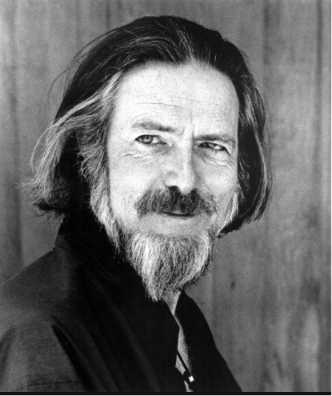
You feel like real life hasn't started because you're measuring your current self against a finished version of you that doesn't exist yet — and never will. That competent, unshakeable, arrived person you're preparing for isn't waiting somewhere ahead. There's no stage where the preparation ends and the living begins.
What you're calling exhaustion isn't the cost of falling short. It's the cost of running toward a finish line that was invented, not discovered. Alan Watts named this trap decades ago: the more energy you spend trying to become someone, the further "arriving" moves away from you. The relief doesn't come from finally getting there. It comes from noticing there was never a there to get to.
This traces why chasing a finished version of yourself keeps the goalpost permanently out of reach, using Alan Watts' idea of the persona — the mask you forgot you put on.
- Why "just be yourself" is a command that cancels itself
- A trigger-based practice for catching the rehearsal mid-loop
- The real difference between growing and becoming someone else
Notice the Difference Between Growing and Becoming
Growing and becoming someone else feel identical from the inside. Both involve effort. Both involve change. But they point in opposite directions.
Growing is what a tree does. It doesn't consult a blueprint of the tree it's supposed to be in ten years. It just extends from where it already is, season by season, using exactly what's there right now.
"That agonizing sensation of always being almost there."
Becoming someone is different. It requires a fixed target — a finished, corrected, more acceptable you — sitting somewhere in the future. Every action gets measured against that target instead of against what's actually needed today.
That's the sensation above. Not far behind, not close enough to relax — just permanently almost. Watts pointed at something specific here: the target itself is fictional. You didn't fall short of an achievable goal. You built an unachievable one and then blamed yourself for not reaching it.

Catch Yourself Reaching for the Next Milestone
Notice where your mind goes when things get quiet. For most people, it goes forward — to the next promotion, the next relationship milestone, the next version of the routine that will finally stick.
That forward-lean isn't planning. Planning has an end point and then stops. This doesn't stop. It's a low hum of dissatisfaction with now, dressed up as ambition.
The tell is simple: does satisfaction ever actually land when you get there? Or does the target just quietly move further out the moment you arrive? There's a way to catch this movement while it's happening, instead of noticing it only in hindsight.
Use This the Next Time You Catch Yourself Rehearsing
This works because it interrupts the loop at the exact moment it starts, rather than trying to reason your way out of it afterward.
When you catch your mind narrating a future version of a conversation, an achievement, or a corrected version of yourself, do this:
Trigger: you notice you're rehearsing a future moment instead of living the current one.
Response: name it, even quietly — "rehearsing." Just the one word.
Then: bring your attention to one physical sensation happening right now — your hands, your breath, the chair under you.
Hold that for ten seconds before letting your mind go wherever it wants next.
You're not fighting the rehearsal. You're just refusing to mistake it for the present moment. That distinction alone does most of the work.
See the Mask for What It Actually Is
The word "persona" originally meant the mask an actor wore on a Greek or Roman stage — built with a small horn attached, to project the voice to the back row.
The mask wasn't the problem. Actors put it on, performed, and took it off. The problem starts when the curtain closes and you forget to take yours off.
"Any forced movement you make based on this command will be fundamentally wrong."
Watts traces this exact mechanism — the double-bind of being told to "just be yourself" — in a passage that lands harder heard than summarized. The narrated version below walks through it in his own cadence.
Any forced movement you make based on this command will be fundamentally wrong, because spontaneity can't be produced on demand. You can't try your way into naturalness. Trying is the opposite of it.
This is why "just relax" never works in the moment you need it to. You're being handed an order that cancels itself the second you obey it. Once you see this, you stop treating your discomfort with the mask as evidence you're doing life wrong. It's evidence you noticed the mask at all — which most people never do.

Compare What Your Mind Does With What This Points To
Laid side by side, the pattern your mind runs and the alternative this teaching offers look almost nothing alike.
| What Your Mind Does | What This Points To |
|---|---|
| Measures today against a finished future self | Measures nothing — there's no fixed target to fall short of |
| Treats "arriving" as a location you haven't reached | Treats arriving as a fiction the mind manufactures to stay busy |
| Tries harder to "be authentic" on command | Notices that trying cancels the thing being tried for |
| Sees the mask as a flaw to fix | Sees the mask as a costume you can simply take off |
| Waits for peace to arrive later | Finds peace was available in the noticing, not the arriving |
Trace This Back to Alan Watts Himself
Alan Watts (1915–1973) was a British philosopher who spent much of his career translating Zen Buddhism and Vedanta for a Western audience raised on very different assumptions about the self. You can read more about his life and lectures on Wikipedia, or find recordings of his talks through the Internet Archive.
"Stop acting, and just watch the breathing happen by itself."
He didn't ask people to destroy the ego through years of discipline. He pointed out, often with a laugh in his voice, that the ego was never solid enough to need destroying in the first place. That line above is closer to his actual instruction than any five-step method could be.
Questions This Brings Up
Is this saying I shouldn't set goals?
No. Setting a goal is fine. Living permanently ahead of yourself, using the goal as the only place you'll allow yourself to feel okay, is the part worth noticing.
How is this different from just giving up on self-improvement?
Giving up is still future-focused — it decides, in advance, that trying is pointless. This is about noticing where you already are, which has nothing to do with trying harder or less.
What if the trigger practice doesn't work right away?
It usually takes a few tries before you catch the rehearsing in real time instead of five minutes later. Catching it late still counts — it builds the same noticing.
Where does the word persona actually come from?
From the mask worn by actors in Greek and Roman theater, built with a small horn to project the voice — literally to sound through.

"What remains beneath the rubble of all your broken expectations is just the living, pure, and direct experience of existing right now."
The mask was never welded to your face. It was always just resting there, waiting for you to remember you could take it off between scenes.