What Nobody Admits About How They Spend Their Days
You approach the threshold of your home at night, extending a hand to rotate the brass deadbolt until the internal iron mechanism seats itself firmly. You do this to ensure that no stranger can wander into your living room or occupy your sofa without an invitation. Yet tomorrow morning, you will stand in your kitchen with a cold ceramic mug and watch your daylight vanish into messages you never wanted to answer, leaving your actual existence completely unlatched.
Your exhaustion is not the result of a heavy workload, but the consequence of treating your attention as a free resource. While you fiercely defend your physical property against the smallest trespass, you allow others to walk freely into your life and possess your hours without a fight. You are tired because your energy is being stolen in fifty tiny scraps, handed out to spare yourself three seconds of social awkwardness.
Notice the strange, hidden ledger that runs beneath your daily routine. You show up on time. You look composed. People see someone with their hands firmly on the wheel, but inside, you feel like a tenant in your own skin. The hours arrive in a rush, and you sit smiling politely while the sunlight moves across the floorboards, dying inside as an acquaintance dumps an hour of nervous complaint into your ear. You keep the surface polite because you were taught that refusing a request is a moral failure, failing to see that your energy is being looted.
The Iron Catch and the Open Life
If a stranger walked onto your lawn with a shovel and began digging up your turf, you would be on the porch in five seconds. You would demand to know who gave him the right to step across your property line. But when someone demands an hour of your focus, an hour of your irreplaceable heartbeat, you surrender it without asking what it will cost to replace it. The hard truth is that you cannot replace it. Land can be bought back, and money can be earned again, but once the light of four o’clock is gone, that specific moment never touches your hands again.
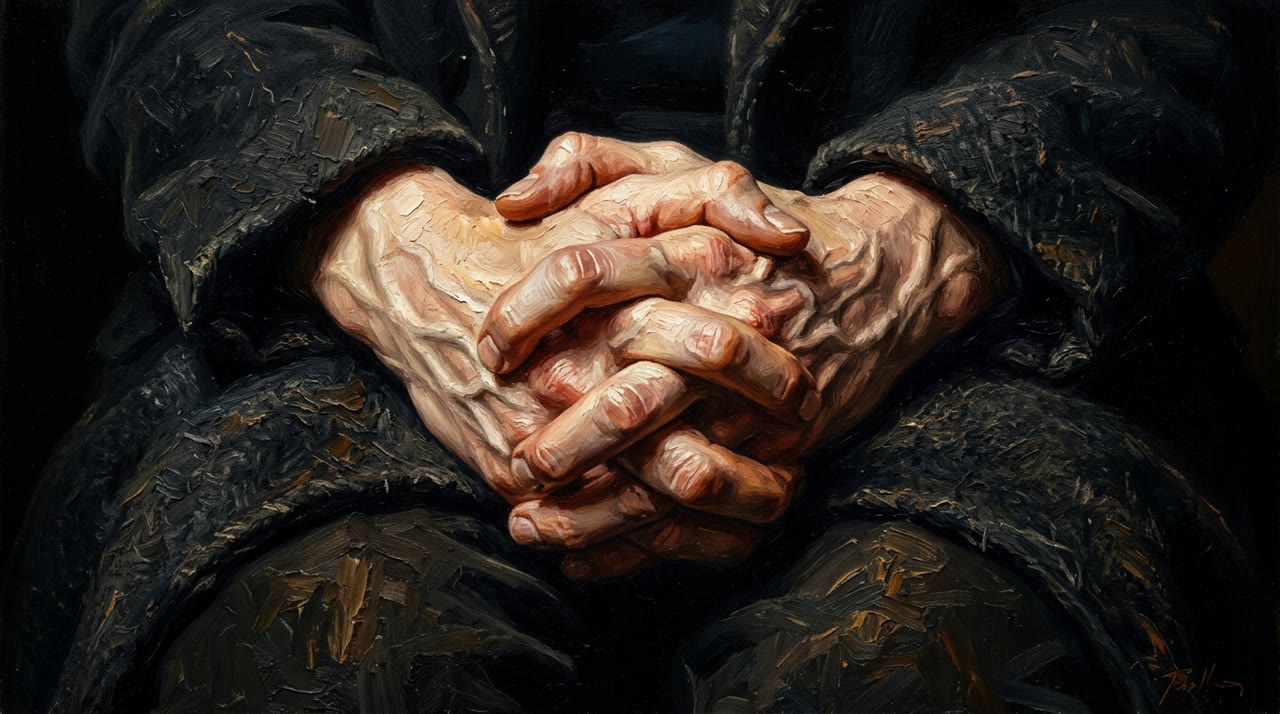
Think of an irrigation canal cut into dry earth. The water flows from the mountain, cool and clear, meant to feed a grove of trees. If the canal is walled with hard stone, the water reaches the roots and the grove lives. But if the owner is too polite to build a gate, every traveler dips a bucket into the stream. By noon, the channel is a wide, swampy puddle, and the trees die in the dust. You are the owner of that orchard, wondering why the heavens never gave you enough rain, when in reality, you simply let every stranger carry it away by the cupful. This loss of flow is exactly why the highest good must sometimes settle in the low places where it cannot be easily reached.
The morning you promised to yourself often vanishes into other people's emergencies. You find yourself staring at a blue ink rollerball pen lying across unfinished notes, realizing you spent the last four hours answering questions that could have waited until next month. To spare yourself a moment of friction in your throat, you traded away three hours of your mortal existence. This brings us to the specific way we value dirt over days.
The Roman Forum and the Foot of Dirt
Two thousand years ago, the philosopher Seneca watched the citizens of Rome and noticed this exact madness. He saw wealthy men hire lawyers to litigate a single foot of dirt on a boundary line, screaming in public if a neighbor moved a wooden fence post three inches. Yet those very same men would invite every flatterer and useless visitor into their homes, letting them consume months of their lifespan without offering a single coin in return. Seneca pointed out that people are stingy with their cash, but when it comes to handing out their time, they become wild spendthrifts with the only wealth they can never replenish.
This is not a modern problem born of pocket screens; it is a timeless human delusion. Michel de Montaigne locked himself in a stone tower to prevent the town from turning his mind into a public highway. Leo Tolstoy noted in his journals that most human suffering comes from the inability to sit still in a room without letting others drag you into their petty business. They understood that a life is not a collection of objects, but a sequence of attended moments. When you lose the power to choose where your eyes land, you lose the power to own your life.
While these words describe the logic of the theft, the video captures the specific silence between these decisions—the weight of a life left unlatched.
The problem is not that your job demands too much or that your family lacks consideration. It is that you do not value your life enough to say no to people who want a slice of it for free. You would not leave your wallet on a park bench while you took a nap, yet you leave your attention scattered across the sidewalk for anyone to kick around. To change this, we must look at the efficiency of the stone carver.
The Surveyor’s Granite Solution
An orchard surveyor once spent a summer carving property markers into heavy granite rocks with a hammer and a chilled steel chisel. A young man asked why he labored over cold rocks when nobody was currently disputing the boundaries. The surveyor replied that when the boundary is clear in stone, a man only has to defend his land once every fifty years. But when the boundary is left to memory and good manners, he has to fight his neighbors every single morning before breakfast. You are currently fighting every morning because you have no granite markers in your life.

Tonight, the world will come knocking again. Your phone will chime with a sudden panic that belongs to someone else. You will be tempted to open your attention to every flashing banner while your supper goes cold on the plate. Stop waiting for someone to grant you permission to hold your own days. No one is going to hand you back the last ten years and apologize for taking them. They took your time because it was sitting there, unprotected and free. Finding a joy that does not depend on external approval begins with the simple act of barring the door.
| Feature | Physical Property | Mortal Time |
|---|---|---|
| Replacement | Can be earned or bought | Gone forever once spent |
| Defense | Socially expected and legal | Socially awkward and ignored |
| Theft Impact | Loss of material comfort | Direct erasure of life |
The Single Question for the Latch
The next time someone asks for "just a minute" or a panic arises that is not your own, do not look at your clock. Ask yourself this single question before you answer:
"What is the price of this 'yes' in sunset hours?"
If the request is not worth a literal piece of your remaining life, do not open the latch. Let the social awkwardness sit in the air for three seconds. It is a small price to pay for the return of your afternoon.
Frequently Asked Questions
Why does saying no feel like a moral failure?
We are conditioned from childhood to equate politeness with virtue. However, politeness at the expense of your own purpose is not a virtue; it is a lack of boundaries. True kindness requires you to be whole, which is impossible if your energy is constantly being fragmented by external demands.
Is it selfish to protect my time from friends and family?
Protecting your focus is the only way to ensure that when you do give your time to loved ones, it is high-quality and present. Giving a distracted, exhausted version of yourself to everyone is less helpful than giving a focused, rested version of yourself to the few things that truly matter.
How do I handle people who get angry when I set boundaries?
People who benefit from your lack of boundaries are the only ones who will be upset when you create them. Their anger is not a sign that you are doing something wrong, but a confirmation that the boundary was necessary and long overdue to stop the theft of your days.
Turn the latch inward. Barricade your morning. The hours belong to you, or they belong to no one at all.
Continue Reading
- Ever-New Joy: The Teaching That Ends Your Search for More
How to stop looking for fulfillment in things that can be taken away. - The Life You Are Defending Is Just a Story About You
Understanding why we protect our ego more than our actual time. - Why the Highest Good Is Like Water
The mechanical power of taking the low seat in a loud world.