Yogananda's Practice for the Days You Feel Completely on Your Own
When you feel completely on your own, the solution is not to recruit new support but to return to a practice that does not depend on outward noise. Real stability is found by stepping into your own quiet room and utilizing a "yogic key" that retains its efficiency even when every guide has vanished. This period of isolation is not a void; it is the mechanical requirement for your true path to begin. You are currently holding a heavy iron key that belongs to a door you haven't opened yet.
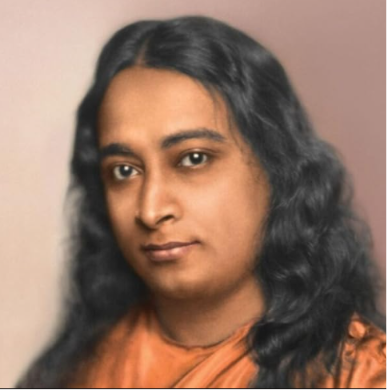
Paramahansa Yogananda once returned home after a grand expedition had utterly collapsed. His companions were gone, his travel plans were in ruins, and he was left standing in a house where the only invitation was to spend a few days in silence. He didn't use that time to browse for new associates or to explain his failure to the neighbors. He walked up the wooden attic stairs, sat on a thin straw meditation mat, and simply began.
You might be in a similar hallway right now. Perhaps you are staring at a phone’s blank lock screen, waiting for a validation that isn't coming. The silence feels like an indictment, as if being unsupported is proof that you’ve taken a wrong turn. But aloneness is often the first sign that the secondary props of your life are being cleared away to make room for something that actually holds weight. When you stop tracing the grain of a wooden table and start looking at the mechanics of your own mind, the "emergency" of being alone begins to dissolve.
The Mechanical Necessity of the Empty Room
We often treat aloneness as a psychological wound, but Yogananda’s tradition treats it as a structural necessity. In his attic room, the absence of his companions wasn't a tragedy—it was a reduction of interference. When you are surrounded by people who agree with you or guides who carry your weight, you never actually learn how the tool works in your own hands. You are essentially borrowing their momentum instead of generating your own.
Consider the exhaustion that comes from managing impressions. When you are walking past a closed door where friends are laughing, and you feel that sharp pang of exclusion, your first instinct is to find a way back in. You want to fix the isolation. But every effort to "fix" it usually involves adding more noise to a system that is already overstimulated. The attic room represents a boundary where the world's demands stop, and the actual work begins.
Yogananda sat in that attic morning after morning. He didn't have a guarantee that he would ever find his master. He didn't have a plan for a global organization. He only had the immediate reality of his own breath and the discipline of staying still. This is the first half of the secret: your isolation is the only place where you can test whether your foundation is built on solid ground or merely on the approval of others. This realization sets the stage for a shift in how you view the tools you've been given.
Why the Practice Works Without a Teacher Present
The great fear of the isolated student is that the teaching loses its power when the teacher is gone. We think we need the voice, the presence, or the constant correction of a guide to keep us on the path. But Lahiri Mahasaya, Yogananda's grand-guru, was explicit about this: the yogic key does not lose its efficiency when the master is no longer present in the body. The practice is a piece of technology, not a personality-driven miracle.
If you have a brass oil lamp, the flame doesn't care who struck the match. It only cares if there is oil and a wick. Similarly, the practices Yogananda brought—the focus on the spine, the calming of the breath, the withdrawal from the senses—are mechanical. They work because of how the human nervous system is wired, not because you have a special connection to a social circle. This is incredibly liberating on the days you feel completely on your own. It means your progress is entirely in your hands.
You might feel like you are standing on a train platform after the last car has left, but the rails are still there. The path doesn't disappear just because the conductor isn't visible. When you return to your practice in the middle of a bad day, you are proving to yourself that the "key" still turns. You are reclaiming the vital strength that you used to leak out while waiting for someone else to tell you that you were doing okay. This is not just a change in perspective; it leads to a complete inversion of how help actually arrives in a life.
The silence you are currently experiencing is not a dead end, but the precise frequency required for a different kind of arrival—one that only occurs when the frantic searching stops.
The Silence That Precedes the Next Guide
In the story of Yogananda’s life, it was exactly during this period of "reduced support" that his key teacher, Kebalananda, appeared. It didn't happen while Yogananda was running through the streets of Calcutta looking for a sign. It happened after he had proven he could sit in his attic and maintain his practice while the world ignored him. There is a law of attraction here that has nothing to do with wishing and everything to do with readiness.

Kebalananda later remarked that sitting in quiet practice at his own guru's feet resolved doubts that years of scholarly debate could never touch. But that arrival was predicated on the silence that came before it. If you are constantly filling your life with secondary panics—checking emails, checking social media, asking for advice from people who are as confused as you are—you are essentially creating too much static for a real guide to find you. You are like a radio that is so loud it can’t receive a signal.
Lao Tzu, the sage who wrote the Tao Te Ching, noted that clear water comes from letting muddy water sit still until the sediment settles. Your isolated days are the "sitting still" phase. You aren't being punished with silence; you are being given the conditions for your own sediment to drop. When the water is clear, you can finally see the bottom. This is where the heavy iron key finally finds its lock. You stop looking for a way out and start looking for a way in.
Reclaiming Vital Strength Through Subtraction
We are taught that growth is about addition—more knowledge, more friends, more accomplishments. But the medieval mystic Meister Eckhart taught that the soul finds its ground through subtraction. You don't gain clarity by stacking more tasks onto an anxious mind. You gain it by dropping what was never yours to carry. Every person you are trying to impress is a weight you can set down. Every plan that failed was a lantern that ran out of oil.
Imagine a traveler who drops his heavy, empty lamps to light a simple hand torch. He walks faster because his hands are finally free. When you are on your own, your hands are finally free. You don't have to carry the expectations of a partner or the demands of a boss for a few hours. You can return to the basic mechanics of being alive. This is where you find the "unbroken" part of yourself that doesn't need a message on a screen to feel valid.

This subtraction isn't about becoming a hermit. It’s about becoming efficient. It’s about learning that you can survive the quiet room. Once you know that, the world loses its power to threaten you with isolation. You become the person who brings the light into the room, rather than the person who is always looking for someone else to turn it on. That shift is the beginning of a different kind of day—one where you are no longer a guest in your own life.
| Condition | The Vanished Guide (Outer) | The Permanent Tool (Inner) |
|---|---|---|
| Source of Power | Relying on someone else's presence. | Relying on the technique's efficiency. |
| Reaction to Silence | Panic, seeking a new distraction. | Observation, returning to center. |
| Ultimate Outcome | Exhaustion from managing impressions. | Stability from building solid ground. |
The Alone-Day Practice: Trigger and Response
The Trigger: The moment you feel the compulsive urge to check your phone for a message, or when the silence of the room feels like a physical weight on your chest.
The Response:
1. The Five-Second Pause: Before you touch the screen or leave the room, stop for five seconds.
2. The Full Exhale: Breathe out completely, letting your jaw unlock and your shoulders drop.
3. The Attic Statement: Mentally say: "The key is in my hand. The tool is efficient."
4. The Return: Instead of checking the notification, perform one small, physical task (like drinking a glass of water from a clay jug) with total attention.
No. It means you stop looking for help from a place of panic. When you stabilize yourself through practice, you become capable of recognizing real guidance when it appears, rather than grabbing at any distraction that promises to end your isolation for an hour.
The "yogic key" begins with the breath and the withdrawal of attention from outward noise. You don't need an advanced technique to start. Sitting still and refusing to react to the impulse of distraction is the foundational mechanical work Yogananda described in his attic.
There is no tracking number for external shifts. The practice focuses on the immediate cessation of strength leakage. By stopping the panic, you are already "fixed" in the only way that matters today. The external arrival follows the internal readiness.
You have the right to stop arguing with the past few months of your life. You have the right to stand in your quiet room and realize that you are still whole, even without the props you thought were mandatory. The heavy iron key you’ve been carrying doesn't unlock a door to the world—it unlocks the efficiency of your own inner attic. The day you feel most on your own is not the end of your direction; it is the exact day your true path begins.
Continue Reading
Why You Feel Alone in Your Body
Understand the physical sensation of isolation and how to reclaim your presence within your own skin.
Why Your Worst Days Are Marcus Aurelius’s Best Material
Learn how to turn a day of total collapse into the foundation for your strongest character.
Marcus Aurelius's Rule for the Morning You Wake Up Defeated
A specific strategy for the moments when you feel you've already lost before the day begins.