What You Reject in Yourself Is the Treasure — Carl Jung
Carl Jung observed that the philosopher’s stone—the goal of the entire human labor—was described by the ancients as something found in the dung heap, stepped on in the street, and utterly despised. We spend our lives cleaning our shoes and avoiding the mud, unaware that the substance we are running from is the only thing that can fill the growing hollowness inside our chests.
The Construction of the Acceptable Wall
There is a specific silence that falls over a childhood home when a child is "too much." It is not always the silence of anger; often, it is the silence of a parent’s disappointment or the soft sound of a heavy wooden door closing to signal that your excitement has become an inconvenience. In those moments, you did not learn to be a better person. You learned to be a smaller one.
You began to build a wall. On the outside of the wall, you placed the parts of yourself that were met with smiles: the quietness, the helpfulness, the reliability. You learned to wear a stained woolen coat of "decency" that never quite fit your shoulders. Inside, behind the stones of the wall, you threw everything else. The anger that could have protected your boundaries, the hunger that could have fueled your ambition, and the loud, messy joy that made the adults uncomfortable.
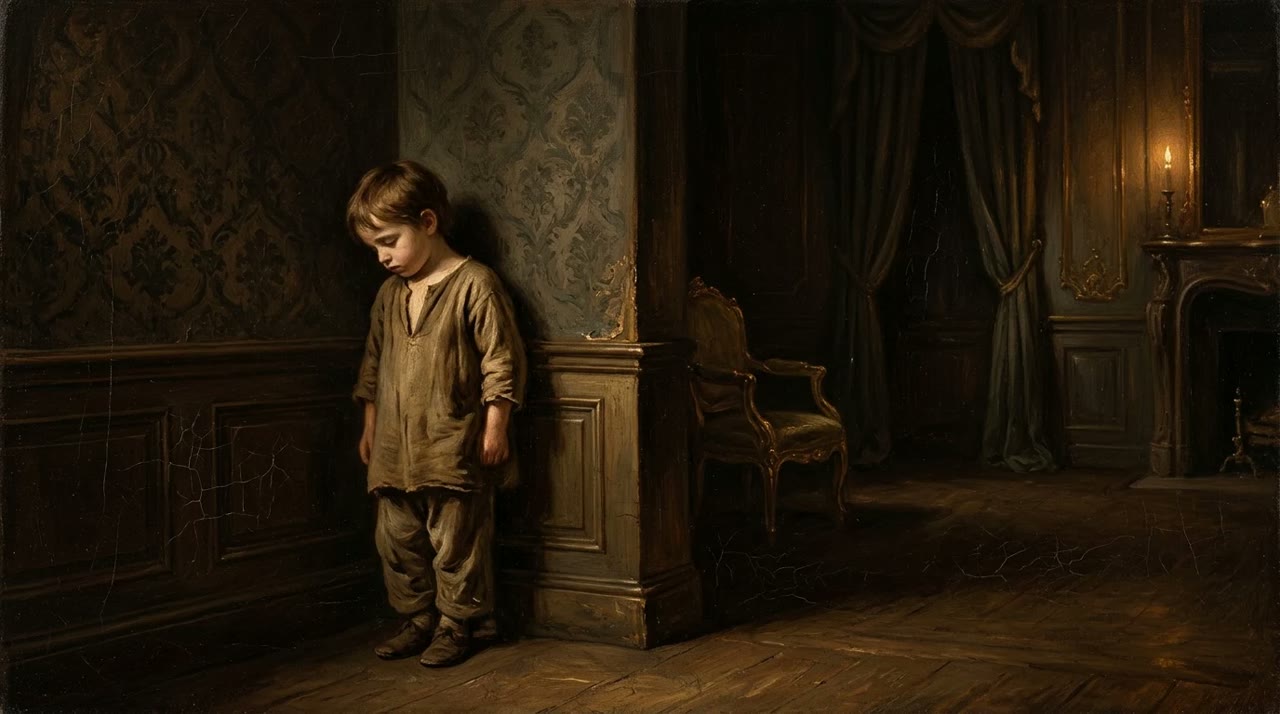
By the time you reached adulthood, you had become a master of the polished surface. People likely describe you as steady or low-maintenance. But as you sit on the edge of a bed in a dark room at the end of the day, you feel the cost. You are not at peace; you are simply unoccupied by your own soul. The wall you built to stay safe has become a prison that keeps your life’s energy out of reach.
This construction is what Jung called the persona—the mask we wear to navigate the world. It is necessary for survival, but it is not alive. To find what is alive, we must look at what the wall was designed to hide. We must look at the migration of the self into the dark.
The Migration of Energy into the Shadow
Jung was adamant that the shadow is not a metaphor for "being a bad person." It is a structure. When you reject a part of yourself, it does not evaporate. It moves underground. If you were told that your anger was "sinful," you didn't stop being angry; you simply lost the ability to use your anger consciously. It migrated into the shadow, where it began to ferment.
This is why you feel a heavy pressure in social situations or a sudden, inexplicable irritability that arrives without a name. The shadow is not a passive storage room; it is a pressurized tank. The more "good" you try to be by force of will, the more pressure builds in the dark. You are spending eighty percent of your daily energy just keeping the rusted garden gate of your shadow locked shut.
Consider the "good" person who never says no, yet reeks of a low-grade contempt for everyone they help. Or the "modest" person who is quietly eaten alive by the success of their friends. These are not character flaws; they are symptoms of a shadow that has been starved of light. The energy that could have been used for genuine love or healthy competition is being used to maintain the performance of the acceptable self.
The text describes the structure of this internal pressure, but to hear the weight of the silence between the words of the alchemists and the specific resonance of the shadow, the video offers a different depth.
The Alchemist’s Stone in the Dung Heap
In his seminal work, Psychology and Alchemy (p. 441), Jung explores the image of the lapis—the philosopher's stone. The alchemists claimed that the most precious substance in the world is in sterquiliniis invenitur: found in the dung. This is the central paradox of shadow work. We expect to find God in the light, in the cathedral, or in our highest ideals. But Jung suggests that the "treasure" is exactly where you would never think to look.
It is in the cracked ceramic bowl of your failures. It is in the "ugly" parts of your history that you try to explain away. It is in the very traits that make you feel like you are failing at being a "spiritual" or "good" person. Jung realized that the material we reject is the only material that contains the power to transform us. If you only work with the parts of yourself you already like, you are simply rearranging the furniture in a room that is already too small.

When you stop choosing only one side of yourself, you begin to understand the "despised thing." The alchemists called it the prima materia—the raw, chaotic, dirty starting point. Without the dirt, there is no growth. A life lived only in the "light" of high ideals is like a plant trying to grow in a sterilized laboratory; it may look clean, but it will never bear fruit.
This is the difficult honesty of the candlelit room. You must be willing to hold a handful of damp garden soil and admit that this, too, is you. You must be willing to find the heavy brass key to the cellar you locked years ago and walk down the stairs without an unlit tallow candle to guide you.
Recovering the Gold from the Rejection
How does a "bad" trait become a treasure? It is a matter of integration. Anger, when repressed, is a destructive explosion or a poisonous resentment. But anger, when integrated, is the capacity for "No." It is the strength to protect your time, your body, and your family. Without your "dark" anger, your "light" kindness is merely cowardice.
Similarly, your "greed" or "selfishness," when integrated, becomes the healthy drive to sustain yourself and take up space in the world. The person who has rejected all selfishness often becomes a hollow martyr who expects the world to pay them back for their suffering. This is the danger of meditation that seeks only the void without addressing the earth; it leaves the person "pure" but powerless.
The gold is not a separate thing hidden behind the shadow. The shadow is the gold in its unrefined state. Your task is not to "overcome" your darkness, but to wash the dirt from the stone until you see that the stone and the dirt were always part of the same ground. This is the only way to end the war within yourself and recover the vitality that was stolen from you in that silent childhood hallway.

The Practice: The Shadow’s Single Question
This is not a meditation or a ritual. It is an act of surgical honesty to be performed once a day, preferably when you feel a flicker of judgment or annoyance toward someone else.
Identify a person who irritates you—not someone who has harmed you, but someone whose "personality" bothers you. Ask yourself this single question:
"What is the one thing this person allows themselves to do that I have strictly forbidden myself from doing?"
Do not look for a moral failing. Look for a capacity. If they are "loud and obnoxious," perhaps you have forbidden yourself from being heard. If they are "lazy," perhaps you have forbidden yourself from resting. The treasure you lack is hidden in the very behavior you are judging.
| The Polished Surface (Persona) | The Fertile Dark (Shadow) | The Integrated Treasure |
|---|---|---|
| "I am always helpful and kind." | Hidden resentment and a fear of being disliked. | Genuine compassion backed by the power to say no. |
| "I am measured and logical." | Suppressed passion and a fear of being "too much." | Deep creative drive that can actually move others. |
| "I am self-sufficient and strong." | Disowned neediness and a fear of vulnerability. | Real intimacy and the ability to be supported. |
Frequently Asked Questions
Is the shadow just my "dark side"?
No. The shadow is simply the "unlived" side. It contains everything you were not allowed to be. For a person raised in a violent home, their "kindness" might be in the shadow. It is not about good or evil, but about wholeness versus fragmentation.
How do I know if I am meeting my shadow?
You will feel a sense of shame or intense discomfort. If it feels "empowering" or "fun," you are likely just indulging an ego fantasy. True shadow work feels like admitting a humiliating truth that you have spent decades hiding from yourself.
Can I do shadow work alone?
You can begin the process through honesty and observation. However, because the shadow is by definition what we cannot see about ourselves, it often requires the "mirror" of another person—a therapist, a partner, or a friend—to point out the patterns we are blind to.
If you have felt the weight of this descent, write the word DIRT in the comments of the video. It is a signal that you are ready to stop cleaning your shoes and start looking for what is buried. To stay with this work, consider subscribing to the channel; we return to this candlelight every week to map the territory Jung left for us.
The ground of your life is not found in the sky, but in the handful of damp garden soil you finally stop trying to wash away.
Continue Reading
- Stop Choosing One Side of Yourself — Carl Jung: Why splitting yourself in two is the root of exhaustion.
- Why You Feel Small Around Certain People — Carl Jung: How the shadow projects onto the people around us.
- Why Meditation Feels Hollow: Jung's Warning: The danger of seeking the light while ignoring the earth.