Stage One: The Moment You Feel Trapped Behind Your Eyes
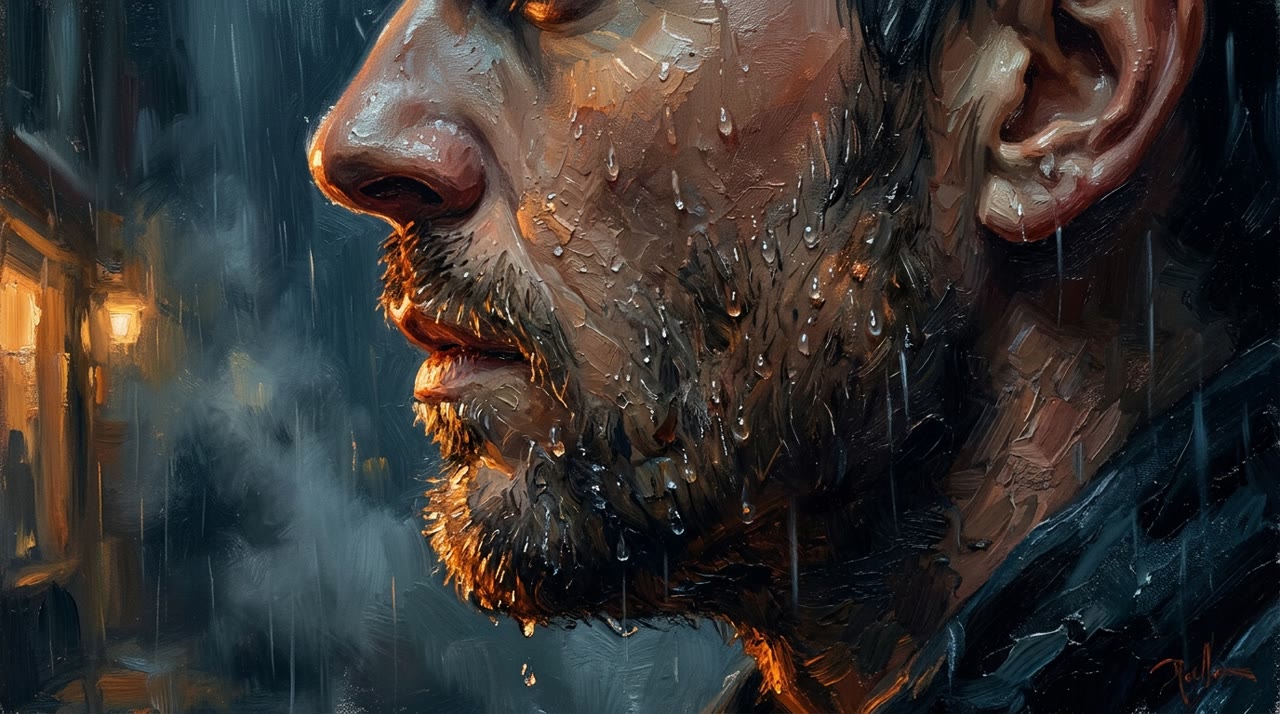
The day begins behind a locked forehead. You stand over a cold porcelain basin at daybreak, turn off a stiff brass faucet, and feel an unyielding density inside your shoulders. You assume this bodily tightness is the boundary of your identity. You take it for granted that everything inside your skin is your personal burden, while everything past the bathroom door is indifferent territory you must somehow manage.
This posture turns ordinary waking hours into a defensive campaign. Without noticing the transaction, you treat the air you inhale as foreign matter crossing a checkpoint. When unexpected friction arrives—an abrupt email, a stalled subway train, a sudden demand on your schedule—your first instinct is to tighten the perimeter. You brace your jaw, pull your ribcage inward, and hunker down inside your skull like a tenant awaiting an eviction notice.
Yet you never inspect the hands laying the bricks. You assume the wall arrived with your birth certificate, fixed and permanent like your blood type. The boundary feels ancient only because the scanning habit producing it never rests. What happens if the wall is not made of stone at all, but constructed out of what you deliberately fail to see?
Stage Two: How the Scanning Spotlight Carves the World Into Pieces
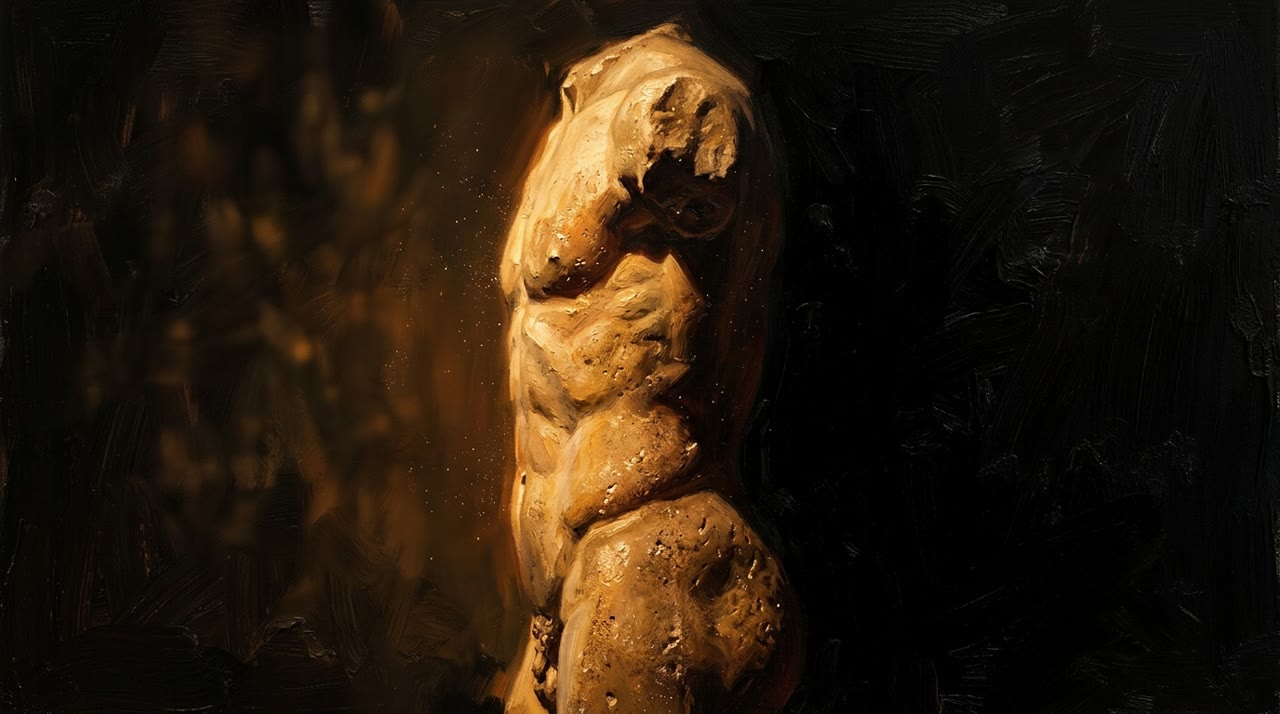
Consider the way a beam of light travels across a windowless cellar. It falls upon a rusted iron nail, a cedar plank, or a patch of stone flooring. Each item leaps forward in sharp relief, crisp and distinct. But to reveal the nail, the beam must leave the surrounding cellar in absolute blackness. Conscious focus behaves according to this exact selective omission: it singles out a distinct figure only by discarding the background that cradles it.
We forget that the beam produces the isolation. Our senses take incoming information sequentially, piece by piece, similar to the line scanner inside a television tube. Because we register reality in consecutive fragments, we jump to the conclusion that reality itself consists of lonely pieces thrown together by chance. We turn nouns into solid fortresses. Much like guarding time like property, we partition an unbroken movement into tiny, manageable parcels and then wonder why we feel starved of space.
Think of listening to a musician strike notes on an acoustic instrument. If you register only the striking hammers and delete the silent intervals separating the tones, the melody evaporates. You are left with a relentless, deafening blare. A crest cannot form without a trough; a solid block cannot exhibit a surface without surrounding air to define it. Solid and void are not warring factions competing for dominance. They are mutual collaborators in a single event. When your gaze rests on any object, it touches the exact frontier where substance and space clasp hands. Why do we consistently treat one side of that handshake as real and dismiss the other as nothingness?
| Dimension | The Defended Perimeter | The Continuous Field |
|---|---|---|
| Focus Behavior | Spotlights isolated figures while actively ignoring context | Registers both the form and the surrounding space together |
| Bodily Feeling | Chronic muscular armor at the jaw, neck, and chest | Settled physical weight without internal brace or strain |
| Relation to Space | Space is viewed as empty, threatening, or alien void | Space is recognized as the necessary partner defining form |
| Daily Orientation | Exhausting maintenance of an identity under siege | Direct participation in an unbroken, ongoing environment |
Stage Three: Defending a Perimeter That Requires Constant Maintenance
The chronic fatigue people report at the close of an ordinary afternoon is rarely caused by muscular exertion. It is the energetic toll of running a security checkpoint sixteen hours a day. Standing at a wet pedestrian crosswalk while clutching a warm paper cup against your chest, you automatically calculate distances between yourself and passing raincoats. You scan faces for judgment, evaluate whether your posture looks composed, and verify whether your reactions project sufficient authority.
This exhausting vigil rests on an unexamined belief: that without continuous vigilance, the core of who you are will collapse into the void. This dread mimics the dynamic of personal relationships, where clinging tightly to loved ones chokes the very vitality it tries to safeguard. By gripping your boundary with such panic, you ensure that every encounter feels like a potential collision. You convert ordinary existence into a bunker.
The philosopher Alan Watts emphasized that this felt isolation is an optical omission rather than a metaphysical law. He noted that conscious focus is fundamentally a process of ignoring—it attends to the bright patch of wood while throwing the rest of the forest into shadow. We take the bright patch, label it as our personal self, and spend lifetimes trying to protect a sliver of light from the darkness that generated it. If this protective labor is entirely self-imposed, what happens to the fortress when the spotlight widens?
Stage Four: The Breakdown When the Interval Becomes Visible
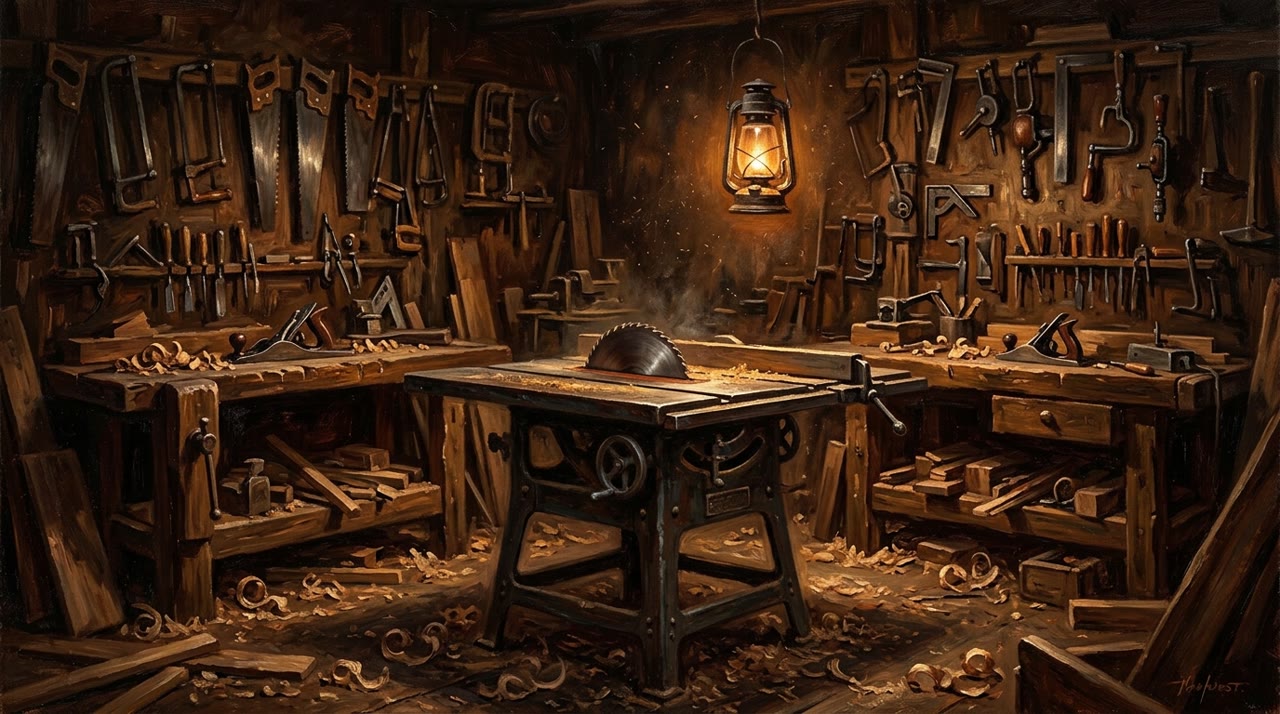
Picture a workshop where a circular steel saw blade spins at high speed under a pulsing strobe light. If the pulse matches the revolutions of the arbor precisely, an observer standing by the bench will see the sharp teeth sitting frozen in mid-air. The steel appears dormant, cold, and rigid. If a hand reaches out to touch that stationary tooth, the limb is instantly severed. The blade seemed motionless only because the light source dropped the moving intervals between the flashes.
Everyday focus functions like that strobe. It registers static landmarks—your title, your bank account balance, your reflection—and systematically drops the continuous currents that bind them together. Sometimes, when a major illness disrupts ordinary routines, this rhythmic hypnosis fractures. The carefully guarded role vanishes, exposing the raw physical continuity that was present all along.
When you stop mistaking the strobe flashes for the total picture, the defensive fortress begins to dissolve. The interval is not a bottomless chasm waiting to swallow your personality. It is the fertile soil that allows any figure to emerge at all. Without the silence of the room, the strike of the grandfather clock cannot be heard. Without the pitch of the night sky, stars cannot show their brilliance. How do you shift from the narrow strobe to the whole field during an ordinary day?
Trigger: The moment you notice your neck tightening or your chest bracing during a routine daily task (such as gripping a paper cup, waiting in a line, or holding a plastic security keycard at an office turnstile).
Response: Immediately expand your focal field to include the spatial interval. Do not push the tension away. Instead, deliberately register the empty air between your ears and your shoulders, the temperature of the hallway enclosing you, and the physical ground supporting your shoes. Let the foreground object remain, but bring the ignored background into equal prominence for three uninterrupted breaths.
Stage Five: The Aperture Expands Beyond the Skin
Dismantling this artificial boundary does not require an aggressive spiritual campaign. Attempting to batter down personal walls with forceful willpower only thickens them, because the battle itself assumes a separate warrior locked inside the ring. You do not need to shatter the spotlight; you only need to adjust its zoom setting.
When you press a plastic keycard against a magnetic lock, feel both the rigid edge of the card and the open space of the corridor framing your wrist. When you walk beneath overhead fluorescent tubes, notice both the glare of the lamp and the wide expanse of floor holding your pace. You are not an isolated visitor dropped into an unfamiliar universe. You are an intricate opening through which the entire environment is taking stock of itself.