The More You Cling to Loved Ones the Less You Live
You believe you are standing at the end of the story, waiting for the ceiling to collapse. You listen to the hum of the refrigerator, watch a car’s tail lights illuminate the fence before turning down the road, and assume this nervous vigil is the only thing standing between your family and catastrophe.
The habit operates like an unpaid watchman. You find yourself walking past an open bedroom door at two in the morning, pausing on the pine floorboards until you can clearly hear the rising and falling of breath beneath a blanket. It feels noble. It carries the solemn weight of a guardian who refuses to sleep while danger circles the perimeter.
Yet that vigilant tension is entirely fraudulent. Not one second of midnight panic has ever shielded another person from an erratic driver, a rogue viral infection, or the slow arithmetic of old age. The calendar does not consult your heart, and your vigilance does not secure a single sunrise.
The Hidden Toll of Mentally Rehearsing Loss
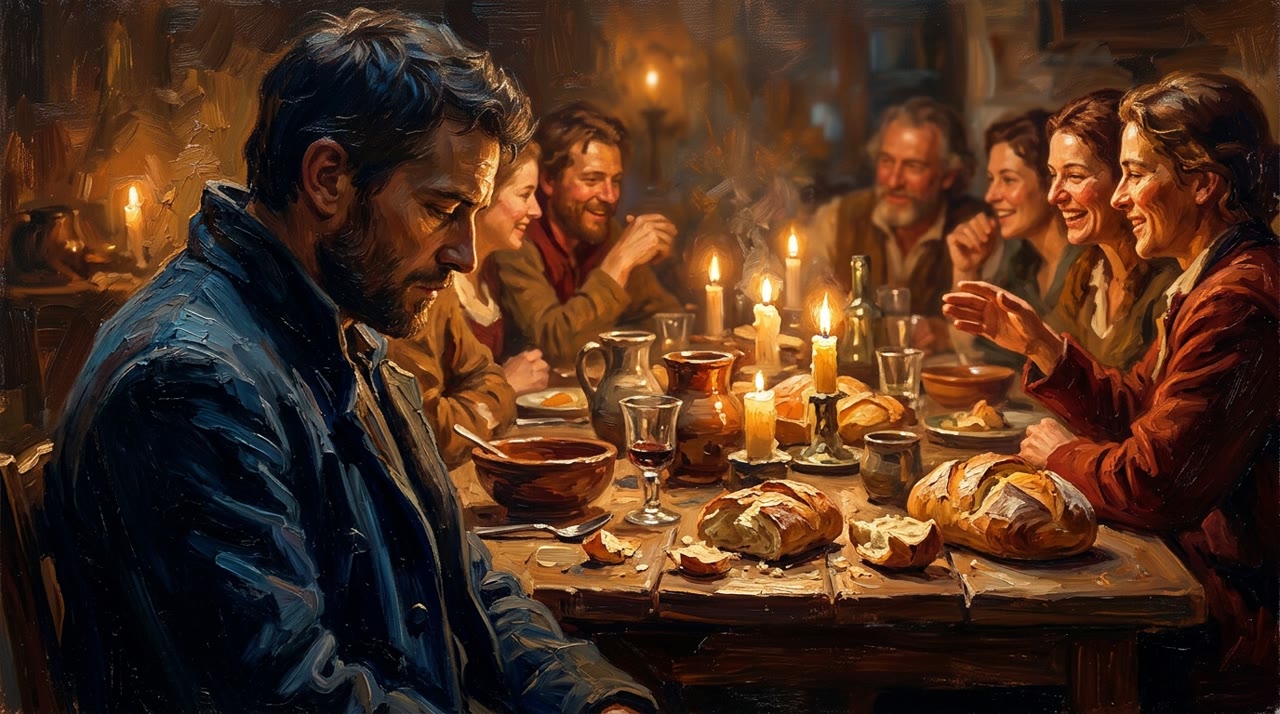
The most brutal cost of this habit is that it removes you from the room without your feet ever taking a step. You can sit directly opposite your partner while steam rises from a kettle and daylight hits the salt shaker, yet remain thousands of miles away. You look at their face and immediately calculate how frail the jawline has become or wonder who will arrange the paperwork when one of you is gone.
This is emotional theft masquerading as devotion. When your imagination is constantly running disaster scenarios, you offer a living friend nothing more than a distracted ghost. You are so busy bracing for the blow of an eventual funeral that you turn an ordinary breakfast into a dress rehearsal for one.
Notice what happens when you treat human interaction this way. Every shared joke carries a dark undertone of eventual silence. Every warm embrace feels hurried, shadowed by the nagging dread that this touch might be the last. Instead of joining ordinary days with a clean spirit, you turn the hours into an inventory of pending grief.
You tell yourself that running these grim projections prepares you, that looking straight into catastrophe will somehow build an armor for your nervous system. But this calculation does not shield you; it actually ensures the very desolation you seek to prevent.
The Boundary Between Care and Custody
Nearly two millennia ago in a Roman province, the Stoic teacher Epictetus pointed out the sheer vanity of this mental wrestling match. In the fourteenth section of his handbook, he wrote plainly that wishing your children, your wife, or your companions could live forever makes you a fool. His reasoning was not cruel; it was mathematical. To desire that mortal creatures never perish is to demand that what belongs to the broader order of nature submit to your private ownership.
Epictetus separated existence into two stark categories: what sits within the boundary of our own choice, and what remains outside it. Your own judgment, your honesty, and how gently you treat someone during this morning's conversation sit entirely within your territory. The biological durability of another person's heart valve does not.
When you demand that a human body remain immune to decay, you are attempting to dictate terms to a universe that never offered you a contract. You turn yourself into a panicked creditor trying to collect on a loan that was always stamped as temporary.
The spoken telling of this Stoic principle carries an unyielding gravity that printed words can never fully capture. In the video below, you can hear the precise cadences and deliberate pauses that break down our stubborn instinct to treat another soul as private property:
Once you see this boundary clearly, the nature of care changes fundamentally. True affection does not build a fortress around another person's breathing body. Affection honors what is here precisely because it is fleeting.

What Changes When You Relinquish the Clench
The mind resists letting go because it confuses loosening the grip with abandonment. You secretly fear that if you cease running catastrophic projections, you will somehow invite tragedy through the front door. You imagine that cold indifference is the only alternative to frantic vigilance.
Yet relinquishing the clench achieves the exact opposite: it returns you to the ground beneath your feet. Consider how value actually operates in the physical world. If a drinking glass were carved from indestructible diamond and guaranteed to survive unbroken for ten thousand years, you would pay it no mind. You would toss it onto the bench without a second thought. It is the brittle, vulnerable nature of fine porcelain that makes your fingers carry it with real care.
A companion who is guaranteed to sit across from you for a millennium requires very little from your attention. But a companion who could be pulled away by noon tomorrow—whose voice exists inside this fragile, passing season—demands your complete presence right now.
| Internal Posture | Possessing the Person | Attending to the Person |
|---|---|---|
| Mental Focus | Projected catastrophe ten years down the road | The actual words spoken across the table today |
| Emotional Cost | Exhausting, constant rehearsal of tragedy | Grounded relief in sharing the immediate hour |
| Underlying Demand | Nature must make an exception for my household | Nature provides a temporary guest to be honored |
| Impact on Others | Smothers companions beneath nervous monitoring | Offers companions an unhurried, calm listener |
Instead of remaining suspended in a perpetual state of emergency, you can begin to see that you never possessed these people to begin with. Rather than discovering how we get defensive over imaginary outcomes, you can meet the actual day as it stands.
This realization requires more than an intellectual nod; it calls for a simple, daily habit that breaks the automatic loop of catastrophic vigilance.
The Daily Habit of the Open Hearth
You cannot dismantle decades of defensive habit by wishing yourself calm. You need a daily physical interrupt that pulls your attention out of the imaginary cemetery and seats it back in the living room.
The Five-Minute Grounded Vigil
Set a timer for exactly five minutes once every afternoon. Sit upright in a hard chair without a phone, a book, or music. Pick one person in your household or immediate life whom you frequently worry over.
Acknowledge out loud, in a steady whisper: "This person is a temporary traveler. I do not own their pulse, and I have no lease on their tomorrow."
Spend the remaining minutes deliberately naming three ordinary facts about them right now: the tone of their laughter yesterday, the pair of boots they left by the door, or the specific way they pour their tea. Release tomorrow completely and let them remain fully alive in your thoughts.
When you practice this deliberate release, you stop using loved ones as fuel for your private worries. You stop demanding that they carry the impossible burden of soothing your dread of mortality.

Frequently Asked Questions
Anticipatory dread happens when you confuse possessing a life with sharing an hour. You mentally rehearse disaster under the mistaken assumption that dread provides an emotional shield. In reality, it simply removes you from the living person sitting directly in front of you.
Letting go of the demand that others live forever is not detachment. It is honesty. When you stop treating partners or children like private property that must survive on your schedule, you can finally witness who they actually are today.
Epictetus observed in Chapter 14 of the Encheiridion that wishing your children or spouse could never die is foolish. It demands that matters beyond your authority submit to your preference. True stability rests in governing your own judgments and desires.
Do not argue with the mental disaster reel. Shift focus immediately to physical reality: feel your feet on the cold pine floor, handle a drinking cup, or listen to the room without trying to secure tomorrow morning's safety.
You have permission to stop standing guard at midnight. You have permission to put down the invisible clipboard, to turn off the silent roll call, and to stop demanding that human beings behave like stone statues that never weather or break.
Pick up the cracked teacup in your kitchen. Drink from it without trembling over whether it will survive until winter. It was meant to hold water today, and that is more than enough.
Continue Reading
-
What Nobody Admits About How They Spend Their Days
Learn how treating your daily schedule as a fortress restores clarity to your work and relationships.
-
Why the Highest Good Is Like Water: The Mechanical Power of the Low Seat
Explore why dropping defensive posturing provides practical leverage in moments of deep uncertainty.
-
The Life You Are Defending Is Just a Story About You
Dismantle the automatic urge to protect your ego during ordinary disagreements and conversations.